
Get Our Best App for Daily Great Recipes 🍽️
Discover warm, delicious, home-style meals — fresh recipes added every day inside Jacky’s Kitchen.
 Coming Soon
Ingredients
Get Our Best App for Daily Great Recipes 🍽️
Discover warm, delicious, home-style meals — fresh recipes added every day inside Jacky’s Kitchen.
Coming Soon
Equipment
Method
Step 1: Heat oil or ghee in a large pot over medium heat.
Step 2: Add onions and sauté until soft and lightly golden.
Step 3: Stir in garlic and ginger, cooking for 30–60 seconds until fragrant.
Step 4: Add diced tomato and cook until it breaks down into a thick sauce.
Step 5: Add cumin, coriander, turmeric, cinnamon, cardamom, black pepper, bouillon, and salt. Stir to create a fragrant spice base.
Step 6: Add rinsed basmati rice and toss well so every grain is coated in the spiced tomato mixture.
Step 7: Pour in water or broth, add raisins if using, and stir once.
Step 8: Bring to a gentle boil, then reduce heat to low. Cover and cook for 15–18 minutes or until rice is tender and liquid is absorbed.
Step 9: Turn off heat, add butter or ghee, cover, and let steam for 5 minutes.
Step 10: Fluff rice gently with a fork and top with fried onions, toasted nuts, or herbs if desired.
Notes
🧊 Storage & Reheating
Store cooled rice in an airtight container for 3–4 days.
Reheat on the stove or microwave with a splash of water to rehydrate.
Do not freeze cooked rice longer than 1 month for best texture.
🥄 Variations
Bariis with Chicken: Brown chicken pieces before sautéing onions and continue with recipe. Increase broth to 4 cups.
Vegetable Bariis: Add carrots, peas, potatoes, or bell peppers with the rice.
Spicy Bariis: Add fresh chili or ½ tsp chili powder to the spice base.
Coconut Bariis: Replace 1 cup water with coconut milk for richness.
Bariis with Xawaash: Use 1 tbsp Somali xawaash spice blend instead of individual spices.
❓ 10 FAQs
What type of rice works best?
Long-grain basmati gives the fluffiest, most traditional texture. Can I use canned tomatoes?
Yes—2–3 tbsp canned crushed tomatoes works well. Why rinse the rice?
It removes excess starch and prevents mushiness. Can I make it without raisins?
Yes—it’s optional but adds subtle sweetness. What protein pairs well with Bariis?
Chicken suqaar, beef, lamb, or fish are all great options. How do I get richer color?
Add a pinch more turmeric or a teaspoon of tomato paste. Can I make it vegan?
Absolutely—use broth or water and substitute oil for ghee. Why is my rice sticky?
Too much liquid or stirring too often—stir just once before covering. Can I double the recipe?
Yes—use a larger pot and increase cooking time by 2–3 minutes. Can I add saffron?
Yes—it gives beautiful color and aroma. 🏁 Conclusion
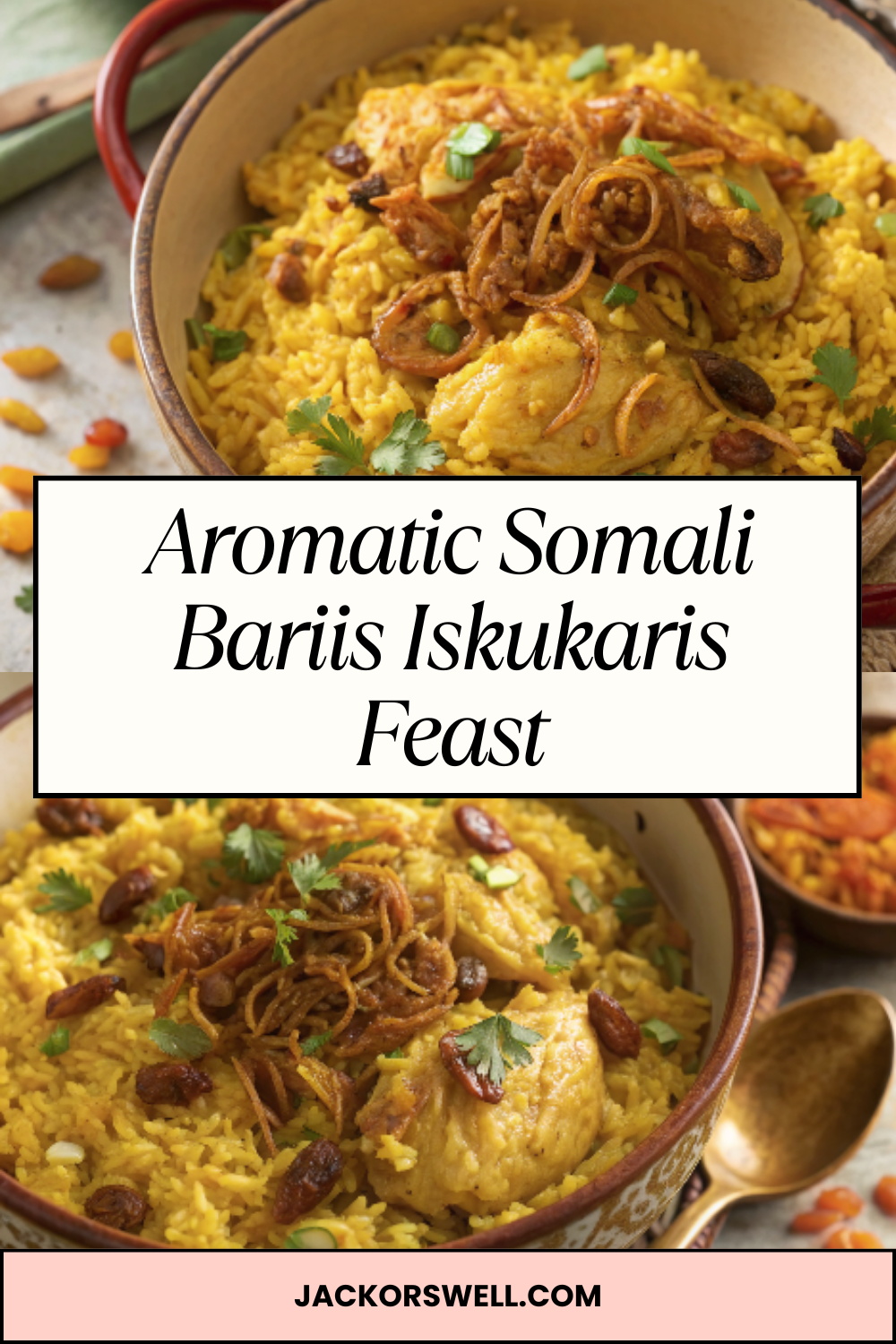
A bowl of Bariis Iskukaris is comforting, aromatic, and full of tradition. Whether served with meat, vegetables, or enjoyed on its own, this Somali classic brings warm spices and soulful flavor to everyday cooking—simple to prepare yet rich enough for special occasions.
Long-grain basmati gives the fluffiest, most traditional texture. Can I use canned tomatoes?
Yes—2–3 tbsp canned crushed tomatoes works well. Why rinse the rice?
It removes excess starch and prevents mushiness. Can I make it without raisins?
Yes—it’s optional but adds subtle sweetness. What protein pairs well with Bariis?
Chicken suqaar, beef, lamb, or fish are all great options. How do I get richer color?
Add a pinch more turmeric or a teaspoon of tomato paste. Can I make it vegan?
Absolutely—use broth or water and substitute oil for ghee. Why is my rice sticky?
Too much liquid or stirring too often—stir just once before covering. Can I double the recipe?
Yes—use a larger pot and increase cooking time by 2–3 minutes. Can I add saffron?
Yes—it gives beautiful color and aroma. 🏁 Conclusion
A bowl of Bariis Iskukaris is comforting, aromatic, and full of tradition. Whether served with meat, vegetables, or enjoyed on its own, this Somali classic brings warm spices and soulful flavor to everyday cooking—simple to prepare yet rich enough for special occasions.